
Última atualização: 26 de julho de 2026
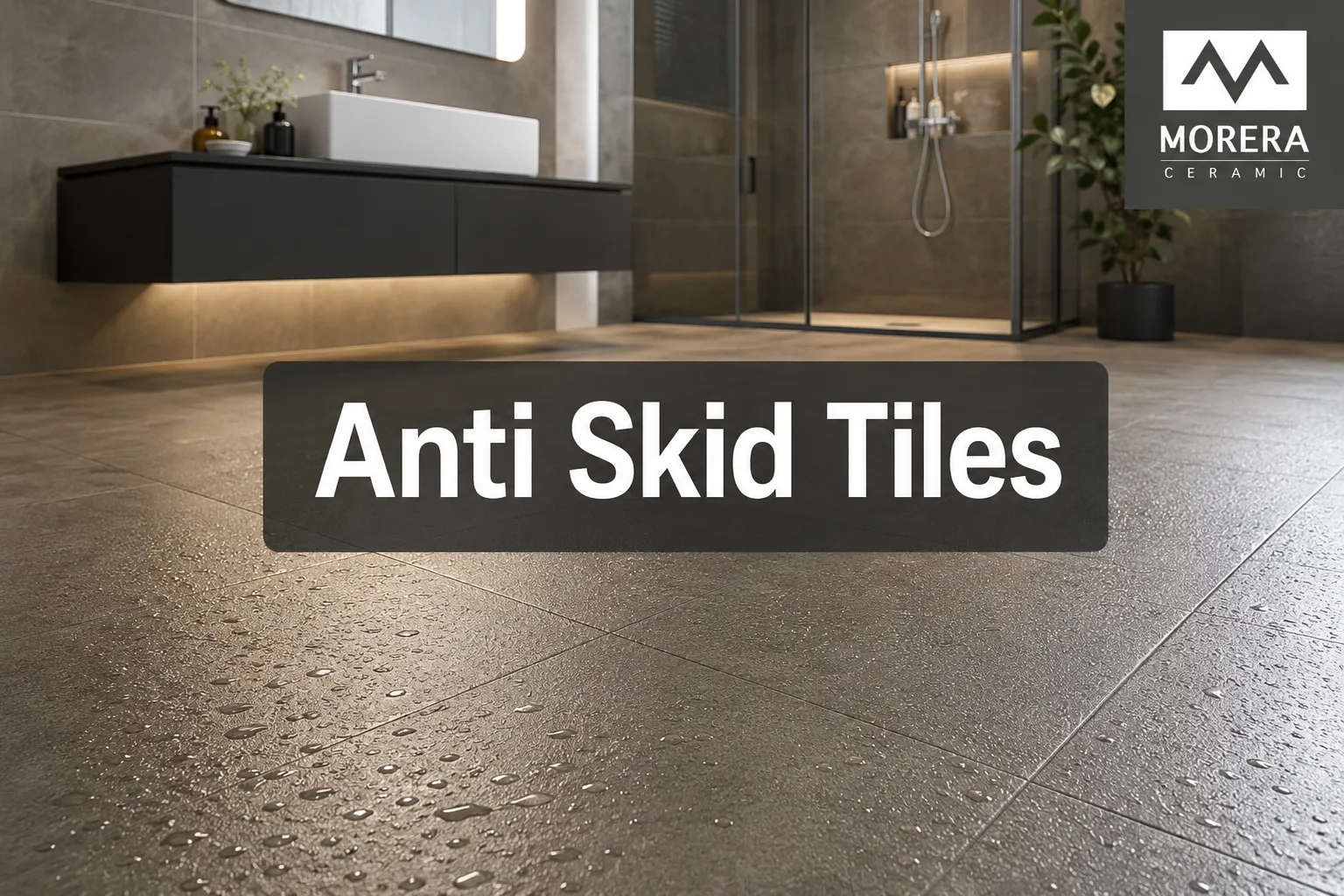
Resposta rápida: Os ladrilhos antiderrapantes são ladrilhos especialmente fabricados com uma superfície texturizada ou tratada que gera atrito sob os pés, reduzindo o risco de escorregões em pisos molhados ou oleosos. Os melhores ladrilhos antiderrapantes para cada espaço dependem do tipo de risco: água, óleo, condições climáticas ou tráfego intenso de pessoas. Banheiros precisam de ladrilhos de formato pequeno com aderência em piso molhado, cozinhas precisam de superfícies foscas de fácil limpeza e áreas externas precisam de porcelanato resistente às intempéries com altos índices de resistência ao deslizamento.
Principais conclusões
- Os ladrilhos antiderrapantes funcionam criando atrito na superfície por meio de textura, relevo ou revestimentos especiais; nem todos os ladrilhos são antiderrapantes por padrão.
- Espaços diferentes exigem níveis diferentes de aderência: um banheiro precisa de maior resistência ao deslizamento do que um corredor seco de escritório.
- Para áreas molhadas onde se anda descalço, como banheiros e áreas ao redor de piscinas, procure azulejos com classificação PEI 3 ou superior e um COF (coeficiente de atrito) acima de 0,60.
- Os azulejos para áreas externas também devem resistir ao desbotamento causado pelos raios UV, à geada e à absorção de umidade; a porcelana é a opção mais confiável.
- Os ladrilhos antiderrapantes para cozinhas comerciais precisam conciliar aderência com facilidade de limpeza, já que a gordura e os produtos químicos de limpeza fazem parte do dia a dia.
- Escadas e rampas apresentam o maior risco de quedas e se beneficiam de texturas com ranhuras mais profundas ou de ladrilhos específicos para bordas de degraus.
- A limpeza regular com os produtos adequados mantém a eficácia dos ladrilhos antiderrapantes; produtos de limpeza inadequados podem acumular resíduos nas ranhuras e reduzir a aderência com o tempo.
- A Morera Ceramics, com sede em Foshan, na China, fornece ladrilhos antiderrapantes de qualidade comercial, incluindo ladrilhos para supermercados, pavimentos táteis e opções antiderrapantes para uso intensivo, para compradores em todo o mundo.
O que são ladrilhos antiderrapantes e como funcionam?
Os ladrilhos antiderrapantes são ladrilhos projetados para reduzir o risco de escorregões, aumentando o atrito da superfície. Eles atuam por meio da textura física (padrões em relevo, ranhuras ou acabamentos ásperos), revestimentos de superfície ou da rugosidade natural de materiais como pedra não polida ou porcelanato fosco.
A principal medida é a coeficiente de atrito (COF). Um COF mais alto significa maior aderência. A maioria das normas de segurança recomenda um COF de pelo menos 0,50 para áreas secas e 0,60 ou mais para áreas molhadas. Algumas normas, como o sistema alemão de classificação R, variam de R9 (baixa resistência ao deslizamento) a R13 (aderência muito alta para uso industrial).
Aqui está uma explicação simples de como os ladrilhos antiderrapantes geram atrito:
- Superfície texturizada: Pontos em relevo, saliências ou padrões em relevo prendem fisicamente a sola do sapato ou o pé descalço.
- Acabamento fosco: As superfícies não polidas apresentam maior rugosidade microscópica do que os azulejos brilhantes.
- Revestimentos de superfície: Alguns azulejos são tratados com compostos antiderrapantes que aumentam a aderência sem alterar a aparência.
- Juntas finas: Quanto mais juntas de rejunte, mais bordas para aderência; é por isso que os pequenos azulejos de mosaico funcionam bem em áreas molhadas.
Nem todo azulejo rotulado como “antiderrapante” tem o mesmo nível de aderência. Sempre pergunte pelo valor do COF ou pela classificação R na hora de comprar, especialmente para espaços comerciais. Você pode explorar Linha de pisos cerâmicos antiderrapantes da Morera para obter as especificações comprovadas de aderência.
Os melhores ladrilhos antiderrapantes para banheiros
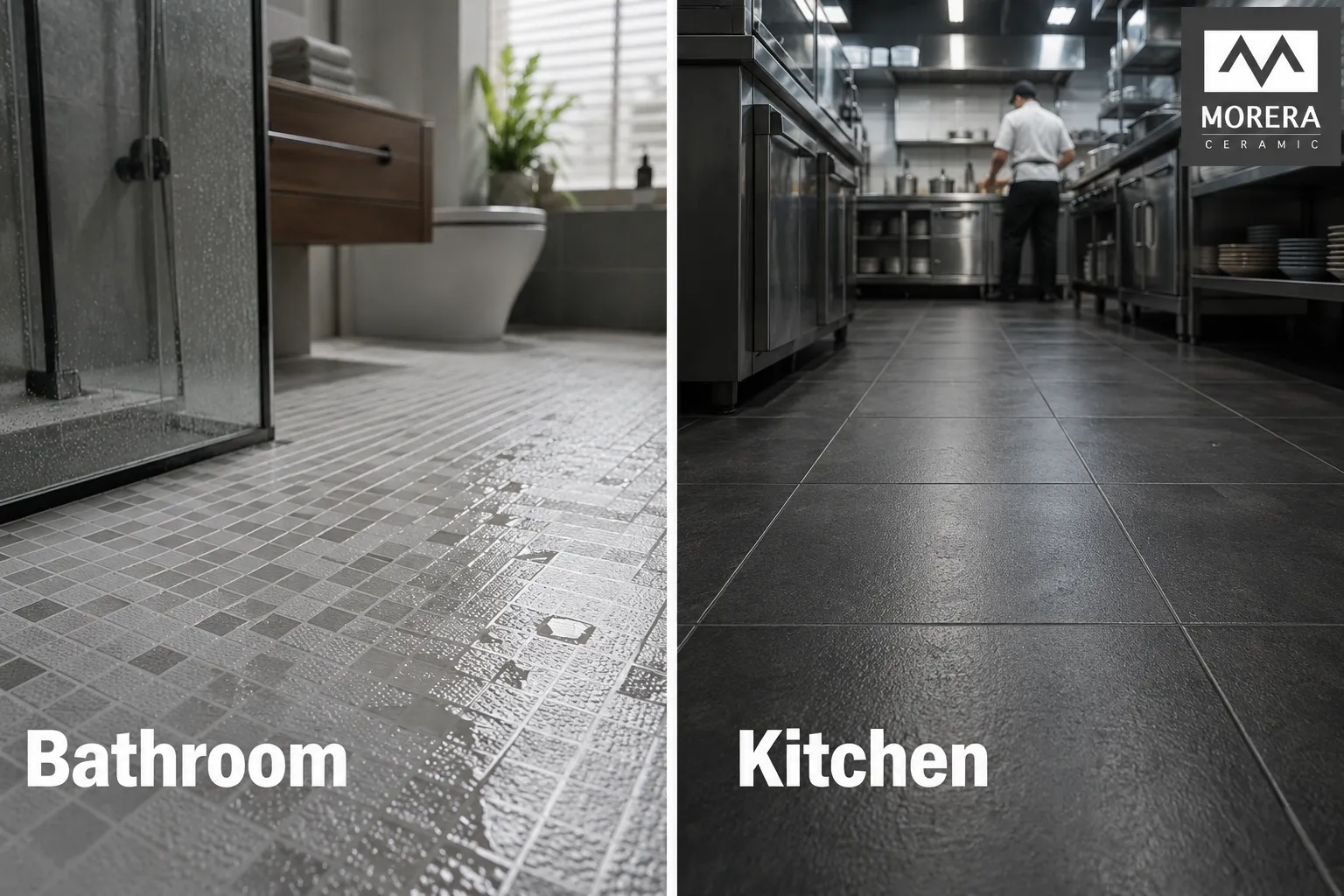
Para banheiros, os melhores revestimentos antiderrapantes são os de cerâmica ou porcelanato fosco de formato pequeno, com um COF de 0,60 ou superior. Superfícies molhadas pisadas com os pés descalços estão entre as mais perigosas em qualquer edifício; portanto, a aderência é a principal prioridade.
Por que os banheiros são locais de alto risco:
- O chão permanece molhado por longos períodos após o banho.
- Os usuários costumam andar descalços, o que proporciona menos aderência do que os sapatos.
- Os resíduos de sabão tornam as superfícies lisas ainda mais escorregadias.
O que funciona melhor:
- Azulejos pequenos de mosaico (5 cm a 10 cm): Quanto mais juntas, mais bordas antiderrapantes. Essa é uma opção muito procurada para pisos de chuveiro.
- Porcelana fosca texturizada: Tem um visual limpo e moderno, mas apresenta rugosidade suficiente na superfície para evitar escorregões.
- Acabamentos com efeito de pedra: A textura da pedra natural proporciona boa aderência e permite uma boa drenagem da água quando instalada com a inclinação adequada.
Para uma drenagem adequada, o piso do banheiro deve ter uma inclinação de pelo menos 1-2% em direção ao ralo. Ladrilhos lisos instalados sem inclinação acumularão água e aumentarão o risco de escorregões, independentemente da textura dos ladrilhos.
Um erro comum é escolher um belo azulejo brilhante para o piso do banheiro. Os azulejos brilhantes ficam ótimos nas paredes, mas tornam-se perigosamente escorregadios quando molhados. Deixe o brilho para as paredes e use acabamentos foscos ou texturizados no piso.
Para uma visão geral completa das opções de cerâmica antiderrapante, consulte este guia sobre ladrilhos de cerâmica antiderrapantes.
Os melhores ladrilhos antiderrapantes para cozinhas
Os pisos de cozinha são expostos a óleo, água, respingos de alimentos e limpezas frequentes com esfregão. Os melhores pisos antiderrapantes para cozinhas são os de porcelanato ou cerâmica com acabamento fosco, que oferecem aderência sem reter gordura em ranhuras profundas.
O principal desafio nas cozinhas: É preciso uma superfície que ofereça aderência aos pés, mas que também seja fácil de limpar. Texturas muito profundas retêm óleo e bactérias, o que representa um problema de higiene em ambientes onde se manuseia alimentos.
Boas opções para pisos de cozinha:
- Porcelana fosca com textura suave: Aderência suficiente para garantir a segurança e suavidade suficiente para limpar rapidamente com o esfregão.
- Ladrilhos de formato médio (30 x 30 cm ou 40 x 40 cm): Menos linhas de rejunte do que nos mosaicos pequenos, o que significa menos acúmulo de gordura nas juntas.
- Cores escuras ou de tom médio: São práticos para uma cozinha em uso, pois escondem as manchas entre uma limpeza e outra.
Equilíbrio entre aderência e facilidade de limpeza:
| Nível de textura | Aderência | Facilidade de limpeza |
|---|---|---|
| Com ranhuras profundas | Alta | Mais difícil de limpar |
| Fini mate com textura leve | Bom | Fácil de limpar com o esfregão |
| Polido/brilhante | Baixo | Muito fácil de limpar |
Para pisos de cozinha, o acabamento fosco com textura leve é a escolha ideal. Se você administra um restaurante ou uma cozinha comercial, procure azulejos com classificação R11 ou R12, pois eles são testados especificamente para ambientes onde há presença de óleo e água.
Os melhores ladrilhos antiderrapantes para varandas e terraços
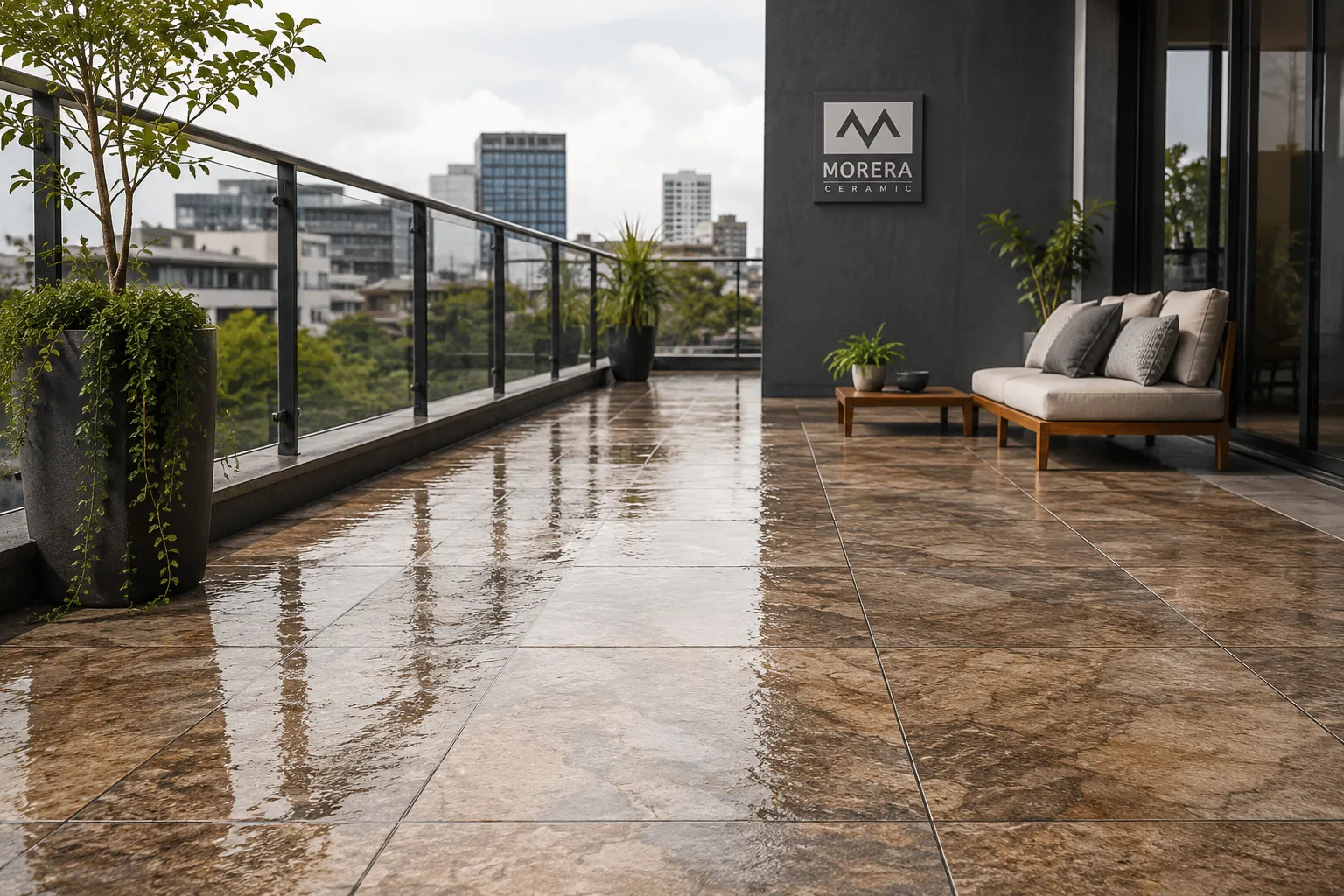
Os pisos de varandas e terraços devem resistir à chuva, à exposição aos raios UV, às mudanças de temperatura e à sujeira do ambiente externo. Os melhores pisos antiderrapantes para uso externo são os de porcelanato de baixa porosidade, com acabamento que imita pedra natural ou madeira e classificação antiderrapante R11 ou superior.
Por que os azulejos para áreas externas são diferentes:
- A chuva deixa as superfícies molhadas sem aviso prévio.
- As variações de temperatura fazem com que os materiais se expandam e se contraiam; os azulejos com alta absorção de água podem rachar com o gelo.
- A exposição aos raios UV desbota as cores com o tempo, caso os azulejos não sejam adequados para uso ao ar livre.
O que observar:
- Porosidade inferior a 0,51 TP3T: Essa é a norma para azulejos resistentes ao gelo. A porcelana geralmente atende a essa norma; muitos azulejos de cerâmica, porém, não.
- Classificação de resistência ao deslizamento R11 ou R12: Adequado para áreas externas expostas à chuva.
- Acabamentos com aparência de terra, pedra ou madeira: Esses produtos têm uma aparência natural ao ar livre e costumam ter a textura ideal incorporada.
Um erro comum em varandas é usar azulejos de cerâmica para ambientes internos em áreas externas. Eles absorvem água, que congela quando faz frio e causa rachaduras. Sempre verifique se o azulejo é adequado para uso externo antes de comprá-lo.
Os melhores ladrilhos antiderrapantes para áreas ao redor de piscinas e zonas de banho
As áreas ao redor da piscina e as zonas de chuveiros estão constantemente expostas à água, o que as torna as áreas molhadas de maior risco em qualquer edifício. Os melhores ladrilhos antiderrapantes para esses locais precisam ter um COF de pelo menos 0,65 e devem ser confortáveis para os pés descalços.
Principais considerações:
- Os pés descalços têm menos aderência do que os sapatos; por isso, a superfície do azulejo precisa compensar essa diferença.
- O cloro e os produtos químicos para piscina podem degradar alguns revestimentos com o tempo; opte por azulejos com textura integrada, em vez de revestimentos aplicados posteriormente.
- Azulejos de cor clara revelam algas e depósitos minerais com mais clareza, facilitando o acompanhamento da manutenção.
Melhores opções:
- Azulejos de porcelana tipo mosaico: Formato pequeno, muitas linhas de rejunte, excelente aderência para uso com os pés descalços em piso molhado.
- Porcelanato com efeito de pedra, com acabamento escovado ou jateado: Textura natural, boa drenagem, confortável para os pés.
- Azulejos específicos para borda de piscina: Projetado especificamente para bordas de piscina com acabamento arredondado e excelente aderência.
Para áreas ao redor da piscina, leve também em consideração a absorção de calor dos azulejos. Azulejos escuros em climas ensolarados podem ficar muito quentes ao pisar neles. Tons claros de cinza ou bege permanecem mais frescos e são mais confortáveis.
Os melhores ladrilhos antiderrapantes para escadas e rampas
Escadas e rampas apresentam o maior risco de queda entre todas as superfícies de um edifício. Os melhores ladrilhos antiderrapantes para escadas possuem textura profunda, altos índices de COF e contraste visível na borda dos degraus, para ajudar os usuários a identificar onde cada degrau começa.
Por que as escadas são diferentes dos pisos planos:
- O ângulo de impacto ao pisar em um degrau é diferente do que ocorre ao andar em um piso plano; portanto, a aderência deve funcionar em várias direções.
- Uma queda na escada é mais perigosa do que uma queda em uma superfície plana.
- Os códigos de construção em muitos países exigem índices específicos de resistência ao deslizamento para as superfícies das escadas.
O que funciona melhor em escadas:
- Ladrilhos com borda em degrau: Elas possuem uma borda frontal arredondada ou com canto arredondado, o que reduz o risco de tropeçar.
- Ladrilhos com ranhuras profundas ou estriados: As ranhuras que se estendem ao longo da largura do degrau (perpendiculares ao sentido de deslocamento) proporcionam a melhor aderência.
- Cor contrastante na borda do degrau: Uma faixa de cor ou textura diferente na borda frontal ajuda as pessoas a enxergarem o degrau, especialmente com pouca luz.
Para rampas, procure ladrilhos com classificação R12 ou R13. Eles são projetados para superfícies íngremes ou inclinadas, nas quais a pressão dos pés se concentra em uma área menor. Você pode encontrar produtos específicos ladrilhos de rampa projetado exatamente para esse caso de uso.
Um erro comum é usar o mesmo tipo de ladrilho em escadas que se usa em pisos planos. Os ladrilhos para pisos planos podem não oferecer aderência suficiente para a superfície inclinada de um degrau.
Os melhores ladrilhos antiderrapantes para áreas comerciais e de alto tráfego
Restaurantes, hospitais, escolas, escritórios e shoppings precisam de ladrilhos antiderrapantes que suportem tanto o alto tráfego de pessoas quanto a limpeza regular. Os melhores ladrilhos antiderrapantes para uso comercial combinam durabilidade (classificação PEI 4 ou 5) com resistência ao deslizamento (R10 a R12) e resistência a agentes de limpeza químicos.
O que diferencia os espaços comerciais:
- Os pisos são limpos várias vezes ao dia com produtos de limpeza industriais.
- O tráfego intenso causa desgaste da superfície ao longo do tempo, o que pode reduzir a aderência.
- A responsabilidade pela segurança é uma grande preocupação; um escorregão e uma queda em um espaço comercial podem resultar em ações judiciais.
Os melhores tipos de azulejos para uso comercial:
- Porcelana para uso pesado (PEI 5): Suporta o maior volume de tráfego de pedestres sem se desgastar.
- Acabamento fosco ou semifosco: Combina aderência com a capacidade de limpeza rápida.
- Azulejos de grande formato (60 x 60 cm ou maiores): Menos juntas, mais fácil de limpar com esfregão, aparência profissional.
Para supermercados, hospitais e áreas de produção de alimentos, procurem azulejos que também sejam resistentes a produtos químicos e fáceis de desinfetar. A Morera Ceramics oferece um linha de pisos cerâmicos antiderrapantes para uso comercial projetados especificamente para esses ambientes.
Para obter mais informações sobre como escolher azulejos para ambientes comerciais exigentes, consulte este artigo guia definitivo sobre ladrilhos para uso industrial e comercial.
Ladrilhos antiderrapantes para ambientes internos versus externos
Os ladrilhos antiderrapantes para ambientes internos e externos não são intercambiáveis. Os ladrilhos para ambientes externos precisam suportar as intempéries, a umidade e as variações de temperatura, condições que os ladrilhos para ambientes internos nunca enfrentam.
Principais diferenças:
| Imóvel | Azulejos para ambientes internos | Azulejos para áreas externas |
|---|---|---|
| Absorção de água | É aceitável até 3% | Abaixo de 0,51 TP3T exigido |
| Resistência à geada | Não é necessário | Obrigatório em climas frios |
| Resistência aos raios UV | Não é necessário | Obrigatório |
| Índice de deslizamento | R9 a R11 (típico) | Recomenda-se usar de R11 a R13 |
| Desgaste superficial | Tráfego moderado | Condições climáticas adversas + trânsito |
Quando usar cada uma delas:
- Uso ladrilhos antiderrapantes para ambientes internos em banheiros, cozinhas, corredores e ambientes comerciais.
- Uso ladrilhos antiderrapantes para uso externo em varandas, terraços, áreas ao redor da piscina, calçadas e qualquer superfície exposta à chuva ou à geada.
Uma observação importante: alguns porcelanatos são indicados tanto para uso interno quanto externo. Verifique sempre a ficha técnica do produto. Se o porcelanato não indicar um grau de resistência ao gelo ou uma absorção de água inferior a 0,5%, não o utilize em áreas externas em regiões com invernos frios.
Comparação rápida: Ladrilhos antiderrapantes da Space
Esta tabela oferece uma referência rápida para a escolha do ladrilho antiderrapante adequado para cada área. Use-a como ponto de partida e, em seguida, adapte-a às suas condições específicas.
| Espaço | Acabamento recomendado | COF mínimo | Classificação R | Formato |
|---|---|---|---|---|
| Banheiro | Textura fosca | 0.60 | R10 | Pequeno (5 a 15 cm) |
| Cozinha | Fini mate com textura leve | 0.60 | R11 | Médio (30-40 cm) |
| Varanda / Terraço | Porcelanato com efeito de pedra | 0.65 | R11 | Médio-grande |
| Área da piscina | Mosaico ou escovado | 0.65+ | R11-R12 | Pequeno mosaico |
| Escadas | Com nervuras / ranhuras | 0.65+ | R12 | Formato “stair-nose” |
| Área comercial | Acabamento fosco de alta resistência | 0.60 | R10-R12 | Grande (60 x 60 cm ou mais) |
Quanto custam os ladrilhos antiderrapantes?
Os ladrilhos antiderrapantes geralmente custam mais do que os ladrilhos lisos padrão, mas a variação de preços é ampla. Como estimativa aproximada, os ladrilhos cerâmicos antiderrapantes básicos custam a partir de cerca de US$ 5 a 10 por metro quadrado, a preço de fábrica. A porcelana de alta resistência para uso comercial, com altos índices de resistência ao deslizamento, pode variar de US$ 15 a US$ 40 por metro quadrado ou mais, dependendo do tamanho, do acabamento e do volume do pedido.
Fatores que afetam o preço:
- Material: A porcelana custa mais do que a cerâmica comum, mas dura mais tempo.
- Formato: Os azulejos de grande formato costumam ser mais caros por unidade, mas são necessários em menor quantidade.
- Certificação: Azulejos com testes comprovados de COF ou classificação R podem ter um preço ligeiramente mais alto.
- Quantidade do pedido: A compra a granel de uma fábrica como a Morera Ceramics, em Foshan, reduz significativamente o custo unitário para os compradores empresariais.
Para obter uma análise detalhada dos preços dos azulejos, consulte isto Guia de preços de ladrilhos antiderrapantes para banheiros e cozinhas.
Os ladrilhos antiderrapantes riscam facilmente?
A maioria dos revestimentos antiderrapantes, especialmente os de porcelanato, é altamente resistente a arranhões. Os revestimentos de porcelanato com classificação PEI 4 ou 5 suportam móveis pesados, carrinhos e tráfego intenso de pessoas sem apresentar arranhões visíveis em condições normais.
No entanto, alguns revestimentos cerâmicos mais macios com revestimentos antiderrapantes aplicados podem apresentar desgaste com o tempo, especialmente em ambientes comerciais. O revestimento também pode se desgastar, o que reduz a aderência.
Dicas para evitar arranhões:
- Use almofadas de feltro sob as pernas dos móveis.
- Evite arrastar objetos pesados de metal sobre a superfície do azulejo.
- Para cozinhas comerciais, opte por azulejos com textura que atravessa todo o corpo do azulejo (o padrão antiderrapante se estende por toda a espessura do azulejo, e não apenas na superfície).
Os ladrilhos antiderrapantes se desgastam com o tempo?
Sim, os ladrilhos antiderrapantes podem perder a aderência com o tempo, mas a rapidez com que isso ocorre depende da qualidade do ladrilho e da forma como ele é mantido. Os ladrilhos com revestimento superficial se desgastam mais rapidamente do que aqueles com textura integrada. Áreas de alto tráfego apresentam desgaste mais cedo do que aquelas de baixo tráfego.
Sinais de que a aderência está diminuindo:
- A superfície parece mais brilhante ou mais lisa do que quando foi instalada pela primeira vez.
- As juntas estão cheias de resíduos ou de uma película de sabão.
- Você percebe que o carro escorrega mais do que antes.
O que fazer:
- Limpe regularmente as juntas para remover o acúmulo de resíduos.
- Aplique um produto antiderrapante específico para azulejos para restaurar a aderência.
- No caso de pisos comerciais muito desgastados, considere a troca dos azulejos nas áreas de alto tráfego a cada 5 a 10 anos.
Os ladrilhos antiderrapantes são seguros para idosos?
Sim, os ladrilhos antiderrapantes são uma das medidas de segurança mais eficazes para espaços utilizados por idosos. As quedas são uma das principais causas de lesões entre idosos, e a maioria delas ocorre em pisos molhados ou escorregadios.
Para usuários idosos, os melhores ladrilhos antiderrapantes possuem:
- Alto COF (0,65 ou mais): Aderência extra para padrões de caminhada mais lentos e menos estáveis.
- Cores contrastantes nas transições: Ajuda as pessoas com baixa visão a perceberem mudanças no nível do piso.
- Sem bordas afiadas nem saliências: Transições suaves entre os ladrilhos reduzem o risco de tropeços.
- Textura confortável: Não seja tão áspero a ponto de causar desconforto ao se arrastar lentamente.
Os banheiros e corredores são as áreas de maior risco para usuários idosos. A instalação de ladrilhos antiderrapantes nessas áreas é uma melhoria de segurança prática e voltada para o usuário, que também agrega valor a longo prazo ao imóvel.
Como limpar ladrilhos antiderrapantes sem danificá-los
Limpe os azulejos antiderrapantes com um produto de limpeza de pH neutro e uma escova de cerdas duras ou um esfregão. Evite o uso regular de produtos de limpeza ácidos (como vinagre ou produtos à base de alvejante), pois eles podem corroer o rejunte e algumas superfícies dos azulejos com o tempo.
Guia passo a passo de limpeza:
- Primeiro, varra ou aspire a sujeira solta e os detritos.
- Misture um limpador de piso de pH neutro com água morna, seguindo as instruções do produto.
- Limpe o chão com um esfregão ou esfregue-o, prestando atenção especial às juntas, onde se acumulam resíduos.
- Enxágue com água limpa para remover todos os resíduos de sabão; a película de sabão que fica reduz a aderência.
- Deixe o piso secar completamente ou use um rodo para acelerar a secagem.
Erros comuns na limpeza:
- Usar sabão em excesso, o que deixa uma película na superfície do azulejo e reduz a aderência.
- Pular a etapa de enxágue.
- Ao usar um esfregão a vapor em azulejos com revestimentos de superfície, o calor intenso pode danificar alguns tratamentos antiderrapantes.
Para ladrilhos antiderrapantes de área externa, uma lavadora de alta pressão na configuração de baixa pressão funciona bem para remover o acúmulo de algas e musgo.
Ladrilhos antiderrapantes continuam escorregadios: o que fazer?
Se seus ladrilhos antiderrapantes ainda estiverem escorregadios, a causa mais comum é a presença de resíduos de sabão ou gordura acumulados na textura da superfície. Uma limpeza profunda com um produto desengraxante geralmente resolve o problema.
Etapas para solução de problemas:
- Primeiro, faça uma limpeza profunda: Use um desengraxante comercial para azulejos e uma escova dura. Esfregue as juntas com cuidado.
- Verifique se há película de sabão: Despeje uma pequena quantidade de água sobre o azulejo. Se a água formar gotículas em vez de se espalhar, significa que há uma película na superfície.
- Aplique um tratamento antiderrapante: Produtos como sprays ou revestimentos antiderrapantes podem ser aplicados nos azulejos já instalados para restaurar a aderência sem precisar substituí-los.
- Verifique a classificação do azulejo: Se o azulejo nunca foi classificado para uso em ambientes úmidos, talvez ele simplesmente não seja o azulejo adequado para esse espaço.
Se a limpeza e os tratamentos não surtirem efeito, talvez seja necessário substituir o piso por uma opção antiderrapante com classificação adequada. Isso é especialmente importante em espaços comerciais, onde a responsabilidade civil em matéria de segurança é uma preocupação.
Alternativas aos ladrilhos antiderrapantes
Caso os ladrilhos antiderrapantes não sejam a opção adequada para uma situação específica, há várias alternativas que podem reduzir o risco de escorregões.
- Tapetes e tapetes antiderrapantes: Ideal para uso temporário ou imóveis alugados, onde não é possível substituir os azulejos. Eles podem se deslocar ou enrolar nas bordas, o que cria um risco diferente de tropeço.
- Revestimentos antiderrapantes aplicados em ladrilhos já instalados: Tratamentos químicos que lixam levemente a superfície do azulejo para aumentar a aderência. São eficazes, mas precisam ser reaplicados a cada 1 a 3 anos.
- Piso de borracha: Comum em academias e espaços industriais. Oferece excelente aderência, mas não é adequado para a maioria dos ambientes comerciais ou residenciais.
- Piso de vinil com revestimento antiderrapante: Ideal para reformas econômicas. Menos durável que a porcelana, mas disponível em diversos estilos.
Para a maioria dos proprietários de pequenas empresas, os ladrilhos antiderrapantes continuam sendo o melhor investimento a longo prazo, pois não exigem substituição ou reaplicação frequente. O custo inicial é mais alto, mas o custo total ao longo de 10 a 15 anos é menor do que a substituição repetida de tapetes ou a reaplicação de revestimentos.
É possível usar ladrilhos antiderrapantes em escadas?
Sim, os ladrilhos antiderrapantes podem e devem ser usados em escadas, mas o ladrilho deve ser especificamente adequado para uso em escadas. Nem todos os ladrilhos antiderrapantes são adequados para escadas.
O que torna um azulejo adequado para escadas:
- Borda em degrau ou arredondada: Uma borda frontal arredondada reduz o risco de lascas e de tropeços.
- Textura de aderência profunda: A textura deve se adaptar à superfície inclinada de um degrau, e não apenas a um piso plano.
- Classificação R12 ou superior: As escadas são superfícies de alto risco e exigem maior aderência do que a maioria dos pisos planos.
- Tamanho correto do azulejo: O azulejo deve se ajustar à profundidade do degrau da escada sem precisar ser cortado na borda frontal, o que elimina a borda acabada.
Muitos fornecedores de azulejos oferecem peças de acabamento para degraus que combinam com suas linhas de azulejos para piso. Isso proporciona um visual elegante e profissional, ao mesmo tempo em que atende aos requisitos de segurança.
Ladrilhos antiderrapantes para cozinhas comerciais
As cozinhas comerciais precisam de azulejos que suportem, ao mesmo tempo, óleo, água, produtos de limpeza químicos e tráfego intenso de pessoas. Os melhores azulejos antiderrapantes para cozinhas comerciais são os de porcelana de alta resistência com classificação R12 ou R13 e índice de durabilidade PEI 5.
Requisitos específicos para cozinhas comerciais:
- Resistência ao óleo: A superfície do azulejo não deve ficar escorregadia quando houver óleo de cozinha.
- Resistência química: A limpeza diária com desengraxantes e desinfetantes industriais não deve danificar a superfície dos azulejos.
- Drenagem fácil: Os pisos devem ter inclinação em direção aos ralos, e o formato dos azulejos deve permitir essa inclinação.
- Higiene: As juntas devem ser vedadas ou preenchidas com argamassa epóxi para impedir o crescimento de bactérias.
Os pisos R12 e R13 são testados especificamente com óleo como agente deslizante, e não apenas com água. Isso os torna a escolha certa para qualquer ambiente de preparação de alimentos. Os pisos padrão R9 ou R10, mesmo que sejam rotulados como “antiderrapantes”, podem não ser seguros em uma cozinha onde haja óleo.
Dicas finais para a escolha de ladrilhos antiderrapantes
A escolha do ladrilho antiderrapante adequado depende da adequação do nível de aderência, do material e do formato do ladrilho aos riscos específicos de cada espaço.
Um modelo simples de tomada de decisão:
- Áreas molhadas onde se anda descalço (banheiro, área da piscina, chuveiro): Escolha R10-R11, COF 0,60+, formato pequeno, acabamento fosco.
- Área com piso molhado (cozinha, entrada comercial): Escolha R11-R12, COF 0,60+, formato médio, fosco ou levemente texturizado.
- Área externa exposta (varanda, terraço, rampa): Escolha R11-R12, porcelana de baixa porosidade, resistente ao congelamento, se necessário.
- Escadas: Escolha o R12, formato com borda em degrau, textura profunda e borda contrastante.
- Uso comercial intensivo: Escolha R10-R12, PEI 4-5, formato grande, resistente a produtos químicos.
Três perguntas a fazer antes de comprar:
- Qual é o principal risco: água, óleo, condições climáticas ou tráfego intenso?
- Os usuários estarão descalços, com sapatos ou as duas coisas?
- Com que frequência o piso será limpo e com quais produtos?
As respostas a essas três perguntas reduzirão significativamente as opções. Uma abordagem centrada no usuário para a seleção de ladrilhos significa levar em consideração as pessoas que realmente andarão sobre o piso, sua idade, o tipo de calçado que usam e as condições que enfrentam no dia a dia.
Para obter mais orientações sobre como escolher o piso certo para o seu ambiente, consulte este guia sobre quais são os pisos mais adequados para as suas necessidades.
Perguntas frequentes
P: Qual é o valor mínimo do índice de atrito (COF) para o piso de um banheiro molhado? R: A maioria das diretrizes de segurança recomenda um COF de pelo menos 0,60 para áreas molhadas, como banheiros. Para uso com os pés descalços, algumas normas sugerem 0,65 ou mais.
P: Posso usar os mesmos ladrilhos antiderrapantes em ambientes internos e externos? R: Somente se o azulejo for adequado para ambos os ambientes. Os azulejos para áreas externas precisam ser resistentes à geada e ter baixa absorção de água (abaixo de 0,5%). Muitos azulejos para áreas internas não atendem a esses requisitos e racharão em climas frios.
P: O que significam as siglas R9, R10 e R11 nas embalagens de azulejos? R: Essas são as classificações de resistência ao deslizamento da norma alemã DIN 51130. R9 é a classificação mais baixa (adequada para áreas internas secas), R10 é para áreas molhadas, R11 para áreas com óleo ou água e R12-R13 para pisos industriais ou altamente contaminados.
P: Os ladrilhos antiderrapantes são mais caros do que os ladrilhos comuns? R: Em geral, sim, mas a diferença nem sempre é grande. A compra direta da fábrica, junto a fornecedores como a Morera Ceramics, em Foshan, pode reduzir significativamente os custos para compradores empresariais que fazem pedidos em grandes quantidades.
P: Quanto tempo duram os ladrilhos antiderrapantes em uma cozinha comercial? R: Ladrilhos antiderrapantes de porcelana de alta qualidade em uma cozinha comercial podem durar de 15 a 20 anos ou mais, com manutenção adequada. Ladrilhos com revestimento superficial se desgastam mais rapidamente e podem precisar ser substituídos ou ter o revestimento renovado a cada 5 a 7 anos.
P: Os ladrilhos antiderrapantes precisam de rejunte especial? R: Em áreas úmidas ou destinadas ao manuseio de alimentos, recomenda-se o uso de rejunte epóxi. Ele é não poroso, resiste a bactérias e não absorve óleo nem produtos químicos de limpeza, ao contrário do rejunte de cimento comum.
P: É possível usar ladrilhos antiderrapantes em uma piscina? R: Sim, mas apenas azulejos especificamente aprovados para uso em piscinas. Eles devem ser resistentes ao cloro, suportar a exposição constante à água e ter um COF adequado para uso com os pés descalços em piso molhado.
P: Os azulejos foscos são sempre antiderrapantes? R: Nem sempre. O acabamento fosco geralmente oferece mais aderência do que o brilhante, mas um azulejo precisa ter um COF ou uma classificação R comprovados para ser considerado genuinamente antiderrapante. Verifique sempre a ficha técnica.
P: Qual é o melhor tamanho de azulejo para um banheiro pequeno? R: Azulejos de formato pequeno (5 cm a 15 cm) ou azulejos de mosaico são a melhor opção para banheiros pequenos, pois o maior número de juntas proporciona maior aderência, e o tamanho menor permite um melhor contorno ao redor dos ralos.
P: Como posso saber se meus azulejos atuais são seguros o suficiente? R: Despeje uma pequena quantidade de água sobre o azulejo e ande sobre ele com cuidado. Se parecer escorregadio ou se você notar que a água forma gotículas na superfície, é provável que o azulejo não tenha aderência adequada para uso em condições úmidas. Um teste profissional de resistência ao deslizamento pode fornecer uma medição precisa do COF.
Conclusão
O melhor piso antiderrapante não é um único produto, mas sim o produto certo para o espaço certo. Um banheiro precisa de aderência para pés descalços molhados. Uma cozinha comercial precisa de superfícies resistentes a óleo e fáceis de limpar. Uma varanda precisa de porcelanato resistente ao gelo. Escadas precisam de textura profunda e contraste visível nas bordas.
Próximos passos práticos para proprietários de pequenas empresas:
- Liste todas as áreas do seu espaço e identifique o principal risco para cada uma delas (água, óleo, condições climáticas, tráfego).
- Correlacione cada área com a classificação R e o COF recomendados, conforme a tabela comparativa acima.
- Solicite as fichas técnicas dos produtos aos fornecedores e verifique os índices de deslizamento antes de fazer o pedido.
- Para espaços comerciais, consulte os códigos de construção locais; muitos países estabelecem requisitos mínimos de resistência ao deslizamento para áreas públicas.
- Considere solicitar amostras antes de fechar um pedido completo, especialmente no caso de grandes projetos comerciais.
A Morera Ceramics fornece uma ampla variedade de ladrilhos antiderrapantes para uso comercial provenientes de Foshan, na China, incluindo porcelanato antiderrapante para uso intensivo, ladrilhos para supermercados e produtos de pavimentação tátil. Para compradores empresariais que buscam soluções de piso confiáveis e voltadas para o usuário, com preços diretos da fábrica, vale a pena explorar a Linha de pisos antiderrapantes para uso comercial da Morera é um ponto de partida prático.
 Portuguese
  English
  Arabic
  Japanese