Sabe quando o piso fica bom por meses e, de repente, numa manhã chuvosa, no banheiro ou nos azulejos da varanda, parece uma pista de patinação?
É por isso que não se pode presumir que todos os pisos sejam seguros. Se você estiver comprando azulejos antiderrapantes, o acabamento, a classificação e até mesmo as linhas de rejunte são tão importantes quanto a cor ou o padrão do azulejo.
Os azulejos cerâmicos comuns e os azulejos vitrificados esmaltados podem ficar escorregadios quando molhados, especialmente se houver acúmulo de resíduos de sabão.
Neste guia, vou explicar o que realmente faz com que os azulejos antiderrapantes funcionem, como os azulejos antiderrapantes diferem dos azulejos de porcelana comuns e como você pode testar amostras com água usando ferramentas simples, como esfregões, escovas e um pano de microfibra.
Continue lendo.
Principais conclusões
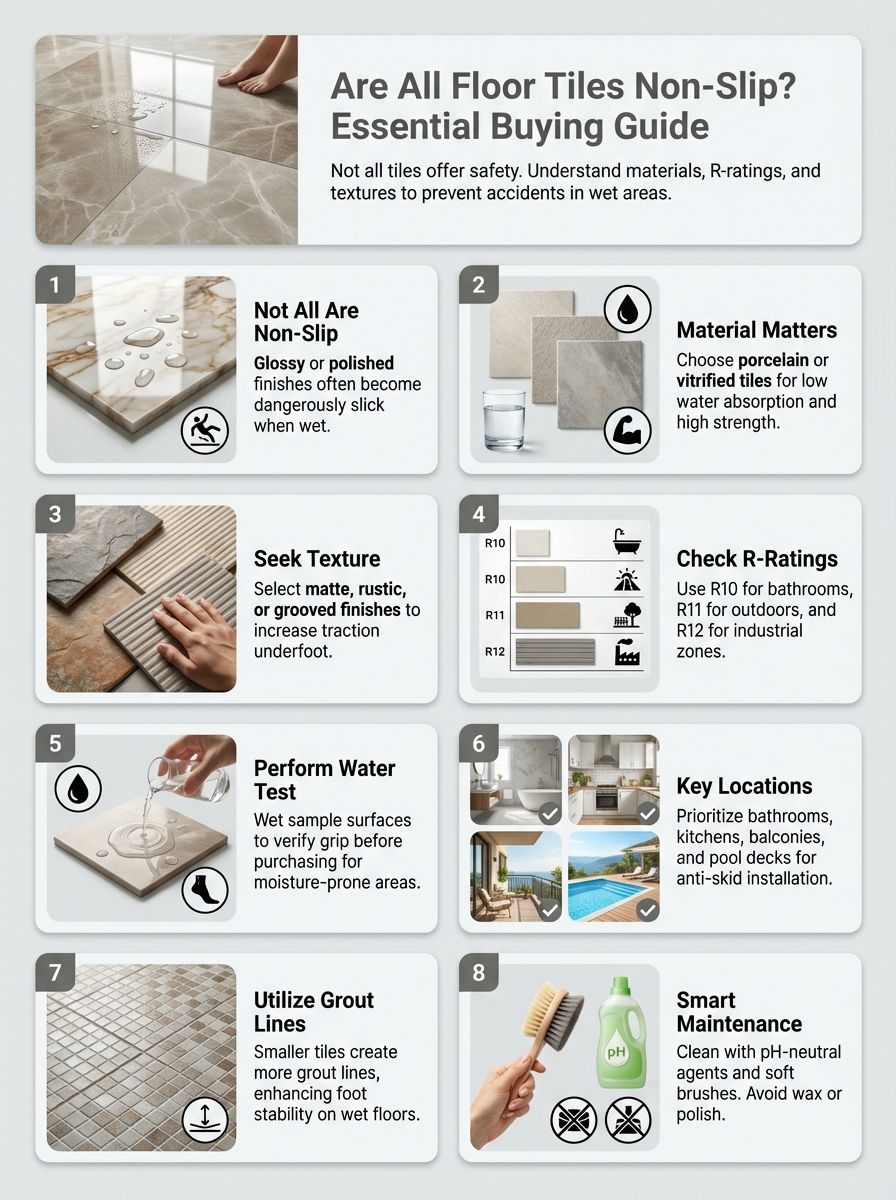
- Nem todos os azulejos são antiderrapantes. A cerâmica brilhante, a cerâmica vitrificada esmaltada e a porcelana polida podem ficar escorregadias quando molhadas; portanto, use azulejos antiderrapantes ou texturizados em áreas propensas à umidade.
- As classificações R são um atalho prático. Para muitos pisos de superfície molhada, R10 é o padrão básico; R11 é uma opção mais segura para pisos externos e rampas; e R12 é adequado para pisos de uso intensivo e pisos comerciais sujeitos a contaminação frequente.
- Para áreas molhadas onde se anda descalço (como chuveiros), não se deixe enganar pelo argumento de marketing do “acabamento fosco”. Peça à marca ou ao revendedor a classificação para uso descalço (A, B ou C) ou um relatório do teste de deslizamento em superfícies molhadas.
- A resistência ao deslizamento pode diminuir se houver acúmulo de resíduos. Mantenha os azulejos texturizados limpos com produtos de limpeza de pH neutro, use uma escova macia para as ranhuras e evite produtos de limpeza ácidos, cera, polidores e esfregões abrasivos.
Todos os pisos são antiderrapantes?
Não, nem todos os ladrilhos são antiderrapantes, e os que apresentam risco são comuns.
Azulejos cerâmicos brilhantes, azulejos vitrificados esmaltados e porcelanatos polidos podem parecer seguros quando estão secos, mas perdem a aderência rapidamente quando se adiciona água, sabão ou poeira fina.
Mesmo um acabamento fosco não é garantia. Algumas superfícies foscas e lapadas parecem ter um aspecto discreto, mas ainda assim apresentam uma camada superficial bastante lisa, o que pode parecer escorregadia para crianças, idosos ou qualquer pessoa com dificuldades de mobilidade.
Nos testes de rampa da norma DIN 51130, as classificações R correspondem ao ângulo mais íngreme em que uma pessoa consegue caminhar sobre uma superfície contaminada com óleo sem escorregar; é por isso que R10, R11 e R12 podem ser uma forma prática de indicar a “aderência” na prática.”
Utilize ladrilhos cerâmicos comuns e ladrilhos vitrificados esmaltados, de superfície mais lisa, em quartos, salas de estar e outros espaços com tráfego de pessoas baixo ou médio, onde o piso permanece seco na maior parte do tempo.
Para azulejos de banheiro, áreas de lavanderia, varandas e pisos externos, opte por azulejos antiderrapantes com classificação definida e uma superfície que você consiga sentir (microtextura, ranhuras ou relevo antiderrapante).
- Evite revestimento de piso brilhante, polido ou liso como um espelho em chuveiros, azulejos de varandas, áreas ao redor da piscina e entradas expostas à chuva.
- Faça verifique a caixa de seleção ou a ficha técnica para R10, R11 ou R12 e confirme se a classificação se aplica exatamente ao acabamento que você está comprando (os acabamentos polido e texturizado podem ter o mesmo nome, mas apresentam características diferentes).
- Faça As juntas são planejadas propositalmente, pois criam saliências sob os pés que melhoram a aderência, especialmente em pisos de azulejos molhados.
Fatores que afetam a resistência ao deslizamento dos azulejos
A resistência ao deslizamento não é uma característica isolada. É o resultado da combinação do material, do acabamento da superfície, do método de teste e da forma como o piso é instalado e mantido.
Se você deseja reduzir o número de escorregões a longo prazo, encare a resistência ao deslizamento como um sistema: a escolha dos azulejos, o rejunte, a drenagem e a manutenção dos azulejos atuam em conjunto.
- Densidade e porosidade do material: afeta a absorção de água, o aparecimento de manchas e a rapidez com que se forma uma película na superfície.
- Acabamento superficial e microtextura: determina como a água escorre e qual é o nível de “aderência” do seu pé ou do seu tênis.
- Testes de deslizamento e classificações: ajuda você a comparar opções sem precisar adivinhar.
- Detalhes da instalação: O desalinhamento (bordas irregulares), a inclinação em direção aos ralos e a largura da argamassa podem fazer com que um azulejo “seguro” pareça inseguro.
Material do azulejo
O material do azulejo é importante porque influencia o comportamento da superfície quando ela fica molhada, ensaboada ou empoeirada.
Na Índia, é comum encontrar azulejos de cerâmica, azulejos vitrificados e azulejos de porcelana; a porcelana costuma ser escolhida para azulejos resistentes à umidade, pois absorve muito pouca água.
A norma ISO 13006 classifica os porcelanatos (Grupo I) como tendo uma absorção de água de E ≤ 0,5%, o que é um dos motivos pelos quais a porcelana é uma excelente opção padrão para azulejos de banheiro, cozinha e áreas externas, onde a durabilidade dos azulejos é importante.
- Ladrilhos de porcelana: Ótimo para áreas úmidas e pisos duráveis, pois a baixa absorção ajuda a reduzir manchas e danos causados pela umidade.
- Ladrilhos vitrificados: uma opção comum para garantia de alta durabilidade em pisos residenciais e comerciais, especialmente em formatos maiores.
- Ladrilhos de cerâmica: pode funcionar bem em ambientes internos, mas escolha com cuidado para áreas úmidas e verifique se o acabamento é adequado para pisos (e não apenas para paredes).
Se você estiver comparando marcas, peça a ficha técnica e procure por referências a métodos de teste reconhecidos (muitas fichas técnicas citam os métodos da série IS 13630 e os testes da série ISO 10545). Isso é um indicador mais confiável do que a inscrição “antiderrapante” impressa na embalagem.
Acabamento da superfície
O acabamento da superfície é o que determina se a resistência ao deslizamento é garantida ou não.
Um acabamento fosco reduz o brilho, mas os azulejos verdadeiramente antiderrapantes dependem da textura, e não apenas do baixo brilho.
Veja a seguir como os acabamentos costumam se comportar em azulejos molhados:
- Polido e com alto brilho: o mais fácil de limpar, mas o que tem mais chances de ficar escorregadio com água ou sabão.
- Fino fosco padrão: better than gloss, but can still get slick if the surface is very flat or gets detergent film.
- Structured / grooved / sugar / rustic grip: best traction, also the finish most likely to trap grime if you skip brushing.
A practical pitfall: the more grip you buy, the more you need a cleaning routine that reaches into the pores and grooves. A quick mop can leave residue behind, which can make a textured tile feel oddly slippery over time.
Slip Ratings (e.g., R10, R11, R12)
Ratings help you match slip resistance to the space, instead of guessing based on look.
One reason you still see R-values in product catalogs is that many manufacturers keep using the familiar ramp-test classes, even though the broader European testing framework changed in 2021.
| Slip Rating | What it means (quick view) | Typical use in homes | Typical use in projects | Decision tip |
|---|---|---|---|---|
| R9 | Lower grip, mainly dry use | Bedrooms, low-splash zones | Dry corridors | If the area can get wet, skip R9. |
| R10 | Moderate grip | Most bathroom tiles (dry zone), kitchen tiles, laundry areas | Commercial corridors with occasional wetting | Good balance of low maintenance and traction for many interiors. |
| R11 | Higher grip | Showers (outside the direct spray), balcony tiles, covered patios | Ramps, parking approaches, external walkways | Choose this when rain, mopping water, or tracked-in dirt is frequent. |
| R12 | Very high grip | Sloped outdoor areas, high-risk wet zones | Industrial areas and heavy-duty commercial tiles | Great for safety, plan tile maintenance because deep textures hold debris. |
| Pro check: If a seller says “anti-skid” but can’t show an R-rating (or a slip test report), treat it as an unverified claim and test samples yourself before buying. | ||||
What Are Anti-Skid Tiles?
Anti-skid tiles are floor tiles engineered to improve traction with a textured surface, a matte finish that is more than cosmetic, or both.
You’ll see them in ceramic tiles, vitrified tiles, and porcelain tiles, including heavy-duty tiles marketed for outdoor tiles, parking, and ramps.
In the Indian market, “anti-skid” often shows up alongside thickness options like 9 mm e 12 mm for many vitrified lines, and thicker builds (including 20 mm) for some outdoor and parking-focused products.
- Bathrooms and showers: prioritize texture and cleanable grooves.
- Balconies and terraces: pick outdoor tiles with higher grip for monsoon rain and algae-prone corners.
- Parking and ramps: consider heavy-duty tiles with R11 or above, plus a finish that still grips when dusty.
The best way to shop smart is simple: treat “anti-skid tiles” as a category, then verify slip resistance with a rating, a test report, and a real sample in your hands.
How to Identify Non-Slip Tiles
If you want to buy the right non-slip tiles the first time, you need two checks: what the label claims, and how the surface behaves in your conditions.
Do both. A rating without real-world fit can still disappoint, and a “grippy” sample can fail if the finish clogs with residue.
- Start with the spec sheet: look for R-rating, barefoot rating (A, B, C), or a COF figure tied to a test method.
- Inspect the surface: tilt it under light, then run your fingers across it. You should feel texture, not just low shine.
- Test it wet: add water, then a drop of soap, and check how it feels with bare feet and with slippers.
- Think installation: if the tile is large-format, confirm your installer can keep the surface flat and avoid lippage.
Look for Slip Resistance Ratings
Start by confirming the tile has a slip rating that matches the room.
As a baseline, many homes do well with R10 in kitchens and general wet-adjacent areas, while R11 is a safer target for balcony tiles, outdoor tiles, and ramps that see rain.
- Bathroom tiles: R10 for the dry zone, consider higher grip in the shower and near the bucket-wash area.
- Kitchen tiles: R10 is common, go higher if the floor often has oil splatter or frequent wet mopping.
- Outdoor tiles: R11 or higher is worth it in monsoon-facing areas.
If you’re buying for showers or pool-style barefoot zones, ask if the brand has a barefoot slip rating (A, B, or C). That’s a more direct match for bare feet than footwear-only testing.
Test with Water or Moisture
A simple water test catches problems fast, and it costs nothing.
Wet the tile, then do a second pass with a little soap, since soap film is often the real culprit in showers and laundry areas.
- Step test (safe version): keep one hand on a stable support, place the sample on a flat surface, and slowly shift weight onto it.
- Microfiber drag test: pull a damp microfiber cloth across the surface. A truly textured tile resists sliding more than a smooth matte.
- Residue check: let the soap-water dry, then re-wet it. If it suddenly feels slick, you’ll need stricter tile maintenance.
For a more objective comparison, ask the dealer for a wet slip test report. In UK slip guidance, 36+ PTV is commonly treated as “low slip potential” for pedestrian areas under wet conditions, which can help you interpret certificates if a brand provides them.
Check for Textured or Matte Surfaces
Choose texture you can clean, not texture that only looks good in a showroom.
Textured tiles, sugar finishes, rustic grip, and structured grooves can improve slip resistance because they break the water film and create edges for your foot.
- If you mop daily: pick a micro-textured matte finish that grips without deep pores.
- If the area gets muddy: choose structured grooves that you can scrub with a soft brush.
- If the space is barefoot-heavy: test comfort. Some aggressive textures feel harsh underfoot.
One more detail people miss: grout lines are part of your traction. Smaller formats and mosaics create more grout lines, which can improve grip on slopes and near drains.
Benefits of Non-Slip Tiles
Non-slip tiles reduce fall risk where water, humidity, and daily mopping are part of life.
They also help you keep floors usable without relying on temporary fixes like loose mats that shift underfoot.
Enhanced Safety
Slip-resistant tiles increase grip under wet conditions, which matters most in bathroom tiles, kitchen tiles, and balcony tiles.
Textures, grooves, and raised patterns help break surface water and give your foot or shoe more contact points.
- For families: a higher-grip floor is a practical safety upgrade for kids and older adults.
- For rentals and commercial tiles: better slip resistance can reduce complaints and accidents in common wet zones.
- For ramps and steps: a grippy tile plus well-placed grout lines can make transitions feel more stable.
Durability in Wet Conditions
Tile durability is not just thickness. It’s also density, abrasion resistance, and how well the surface resists staining and chemicals.
Porcelain tiles are popular for moisture-resistant tiles because low water absorption helps reduce long-term damage and staining in hard-working spaces.
- Wet zones: choose non-porous tiles or low-absorption tiles, then pair them with a grout that resists staining.
- Alto tráfego: check the abrasion rating (often shown as PEI). Higher PEI is useful for entryways and busy kitchens.
- Outdoor tiles: pick a finish that stays grippy when dusty, and a body that handles weather without chipping easily.
Versatility in Design
You don’t have to accept an industrial look to get safety.
Today’s anti-slip tiles come in stone-textured, slate-look, wood-look, cement-look, 3D patterns, and clean neutrals like sand, ash, gray, and taupe.
If you’re budgeting, one brand’s current online listing shows anti-skid tiles commonly ranging from Rs 50 to Rs 100 per sq ft, which is a helpful baseline before you step into premium textures and large formats.
- Small tiles (like 300×300 mm): more grout lines, easier slope control near drains.
- Large tiles (like 600×600 mm and 600×1200 mm): fewer grout lines, a cleaner look, but they demand flatter installation to avoid lippage.
- Pattern strategy: mid-tone matte designs hide water marks better than pure black or pure white in many Indian homes.
Best Places to Use Non-Slip Tiles
Use non-slip porcelain tiles, vitrified tiles, or ceramic tiles with a matte finish and textured surface in bathrooms, kitchens, balconies, laundry areas, and outdoor spaces to reduce slips on wet surfaces and near grout lines, read more.
Banheiros
Bathrooms are the clearest place for anti-slip tiles, because water and soap are constant.
For many homes, R10 works well for the main floor, then you can step up texture or rating inside the shower zone and around the drain.
- Shower floors: consider smaller tiles or mosaics so grout lines add traction and help you shape slope cleanly.
- Avoid gloss on floors: save glossy and polished tiles for walls where you want light bounce without slip risk.
- Plan cleaning access: pick a texture you can scrub with a soft brush, especially in hard-water cities.
For barefoot wet rooms, some technical guidance uses a wet PTV minimum of 36 on level areas, and raises the target to 38 for sloped shower zones, which is a useful way to think about safety margins if a brand can provide pendulum results.
Cozinhas
Kitchens need grip that still cleans easily, because you’ll deal with water, oil, and frequent mopping around worktops and countertops.
R10 is a common target for kitchen tiles, and a micro-textured matte finish often gives the best balance between slip resistance and low maintenance.
- If you cook a lot: consider a slightly more structured surface near the sink and stove run.
- If you want faster cleaning: avoid very deep textures that trap grime in the grout lines and grooves.
- Keep it consistent: use the same floor rating through the whole kitchen so you don’t create a surprise slippery patch.
Outdoor Areas
Outdoor tiles face rain, dust, moss, and algae, especially through monsoon season.
That’s why exterior slip resistance should be higher than indoor, and the surface should be easy to rinse and brush clean.
- Balconies and terraces: aim for R11 where rain hits directly or puddles form.
- Parking and ramps: consider heavy-duty tiles and higher grip because dust and vehicle residue can act like a contaminant layer.
- Thickness options: many outdoor and parking-focused tiles are sold in thicker builds (including 20 mm in some lines) to handle loads and impact better.
Maintenance matters outdoors. If dirt packs into a porous surface or deep texture, the tile can lose the “bite” you paid for.
Maintenance Tips for Non-Slip Tiles
Good tile maintenance protects slip resistance. It also keeps textured tiles from turning into residue traps.
- Daily or as-needed: sweep or vacuum to remove grit that acts like tiny ball bearings underfoot.
- Weekly: mop with a pH-neutral or mild cleaner, then rinse with clean water so detergent film does not build up.
- Monthly deep clean (wet zones): use a soft-bristle brush to scrub grooves and raised patterns, then rinse well and dry puddles.
Avoid acidic cleaners, abrasive cleaners, wax, polish, harsh scrubbers, and soap residue buildup. These can damage finishes, discolor grout lines, and reduce traction over time.
For outdoor tiles, pressure washing can help when soil is heavy, but keep the nozzle controlled and avoid blasting grout lines directly.
After any deep clean, do a quick wet-foot check. If the floor still feels slick, adjust your cleaner, rinse more thoroughly, or consider adding more grip in the highest-risk zones.
Conclusão
Not all floor tiles are safe when wet, and that’s the reason azulejos antiderrapantes exist.
For bathrooms, kitchens, balcony tiles, laundry areas, and outdoor tiles, choose anti-skid tiles or slip-resistant tiles with a verified rating, plus a finish you can feel, not just a matte look.
Prioritize R10 or higher where moisture is normal, pay attention to grout lines, and keep tile maintenance simple and consistent so your anti-slip tiles stay grippy for years.
Perguntas frequentes
1. Are all floor tiles non slip?
No, not all floor tiles are non-slip. Some tiles, like porcelain tiles or ceramic tiles, have a smooth, porous surface and can be slippery, while non-porous tiles and slip-resistant tiles offer better grip.
2. Which tiles work best for wet or moisture-prone areas?
Pick moisture-resistant tiles with texture, such as textured tiles, anti-slip tiles, or anti-skid tiles for bathroom tiles, balcony tiles, outdoor tiles, and laundry areas. Wet surface tiles and slip-resistant tiles cut the fall risk on floors that stay damp.
3. Does the finish or type change slip resistance?
Yes, finish affects slip resistance; a matte finish or textured tiles give more traction than glazed vitrified tiles with a slick glaze. Non-porous tiles can shed water fast, but they still need texture to boost slip resistance and tile durability.
4. What should I choose for heavy use areas like kitchens, counters, or commercial spaces?
Choose high durability options, such as vitrified tiles or porcelain tiles, for kitchen tiles, worktops, countertops, and durable flooring in commercial tiles settings. Heavy-duty tiles and glazed vitrified tiles can handle wear, and proper tiling adds long life.
5. How do I keep non-slip properties over time?
Use gentle tile maintenance, avoid acidic cleaners that damage the surface, and keep grout lines clean to preserve grip. Low maintenance, regular cleaning helps tile durability and slip resistance.
6. Can I make existing tiles safer?
Yes, you can add anti-slip coatings, apply textured mats, or fit anti-skid strips to wet surface tiles and other floors to boost safety. These steps help turn ordinary tiles into more slip-resistant surfaces quickly.
 Portuguese
  English
  Arabic
  Japanese